The Magnifica Humanitas, the first encyclical from Pope Leo XIV, is about staying human in the age of artificial intelligence. And while it is a truly Catholic document, infused with theological doctrine and church teachings, even a highly secular or religiously skeptical reader could take most of it seriously. And should.
I’m not here to visit any of the religious claims. There is vastly more in this document that I agree with than disagree with. And so much to be applauded. Truth is truth.
However, if you wish to skip most of the discussions of Catholic doctrine and history, you can start reading at Chapter 3, Technology and Dominance, The Grandeur of Humanity in Light Of The Promises of AI. But, if I may, I encourage you not to skip it, regardless of your personal beliefs. There is so much worth reading here. And so many of the analogies and references in subsequent chapters appear in chapters 1 and 2.
It makes it evident that “technology is not simply a tool. When it becomes the standard by which everything is judged, it begins to dictate what matters and what can be discarded, reducing creation to an object of exploitation and human beings to mere cogs in a system driven toward ever greater efficiency.”
The encyclical is, in one sense, a Catholic theological argument for what I’ve been calling Humaneering for the last 10 years. Humaneering is the deliberate craft of creating accountable, embodied, emotionally grounded human experiences in a world where AI can mimic connection without any responsibility.
Magnifica Humaneeringas? That’s probably a step too far. As my friend Daniel Rothamel rightly pointed out in our back-and-forth messages this morning, “much of the doctrine in Magnifica Humanitas is 135+ years-old.” We all, every one of us, stand on the shoulders of giants.
My existing framework, which I have labeled “in progress,” aligns neatly. Only the foundation of the papal framework differs. And perhaps the underlying fears differ, to some extent, as well.
“The Vatican is acutely aware of technology’s power to upend existing political and religious order,” Elizabeth Dias writes in her New York Times news analysis. “The invention of the printing press in the 15th century famously preceded the rise of nation-states and the Protestant Reformation, remaking the power of the Catholic church.” AI has similar potential.
So, this moment is existential for the church, perhaps slightly in advance of any existential crisis humanity at large may face. But the timing is really beside the point. The point is that this is one of those moments that shape our future.
As the first paragraph of the introduction states, “Each generation inherits the task of shaping its own era, of guiding history to become a place where the dignity of every person is safeguarded, justice is promoted, and fraternity is made possible. Yet every era also runs the risk of creating an inhumane and more unjust world.”
There are several parts of the encyclical, particularly related to AI and trust, that sound like words I have said from the stage or written before. Some I have uttered many, many times. Thankfully, the encyclical has numbered each paragraph. It makes it so much simpler to reference, not surprisingly, like quoting chapter and verse from scripture.
Magnifica Humanitas, Paragraph 99:
“So-called artificial intelligences do not undergo experiences, do not possess a body, do not feel joy or pain, do not mature through relationships, and do not know from within what love, work, friendship, or responsibility mean. Nor do they have a moral conscience, since they do not judge good and evil, grasp the ultimate meaning of situations, or bear responsibility for consequences. They may imitate language, behavior, and analytical skills, or even simulate empathy and understanding, but they do not understand what they produce, for they lack the affective, relational, and spiritual perspective through which human beings grow in wisdom.”
Magnifica Humanitas, Paragraph 100:
“When words are simulated, they do not build genuine relationships, but only their appearance.”
Those words are spot on. There are so many places where the framing in Magnifica Humanitas is almost exactly my own framing. For example, paragraph 105 makes accountability the central demand: who must “account” for decisions, justify them, monitor them, challenge them, and remedy harm. Paragraph 114: civilization is measured “by its ability to recognize the other as a face, not merely as a function.” Paragraph 239 calls for physical presence as the test of an “anthropology,” naming shared meals, community gatherings, and spending time with the lonely as representative acts of presence and real human connection.
Those are what I frame as “embodied experiences.” We need lots more of them. They are essential to our humanity. And I readily admit that I struggle as much as the next person to pull myself away from the lure of our technological mediation.
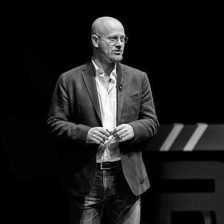
All of this mimics the framework I presented on the stage in Austin, Texas, earlier this year. That AI mimics human connection without responsibility. That the irreplaceable human “thing” is embodied accountability. And where I stake my claim on craft and observable consequence, the Magnifica Humanitas stakes it on the Incarnation and the flesh. Pope Leo XIV also takes on territory Humaneering does not, including labor displacement, autonomous weapons, the environmental cost of AI infrastructure, and the global concentration of computational power. And he does so with exceptional grace.
The place we diverge is the foundation. My framework holds together on observation and consequence. Pope Leo XIV rests his framework on the claim that the human person is the image of the Triune God. We both reach similar practical conclusions. We only part ways when Catholic doctrine and my personal beliefs pull apart. And there are just a few of those.
Truth is truth.
And as Pope Leo XIV says in Paragraph 5, “It now falls to us to face the challenges of our time with clarity of thought and responsibility.“
Add your voice...