
The Slippery Slope Of “Historical” Recreation
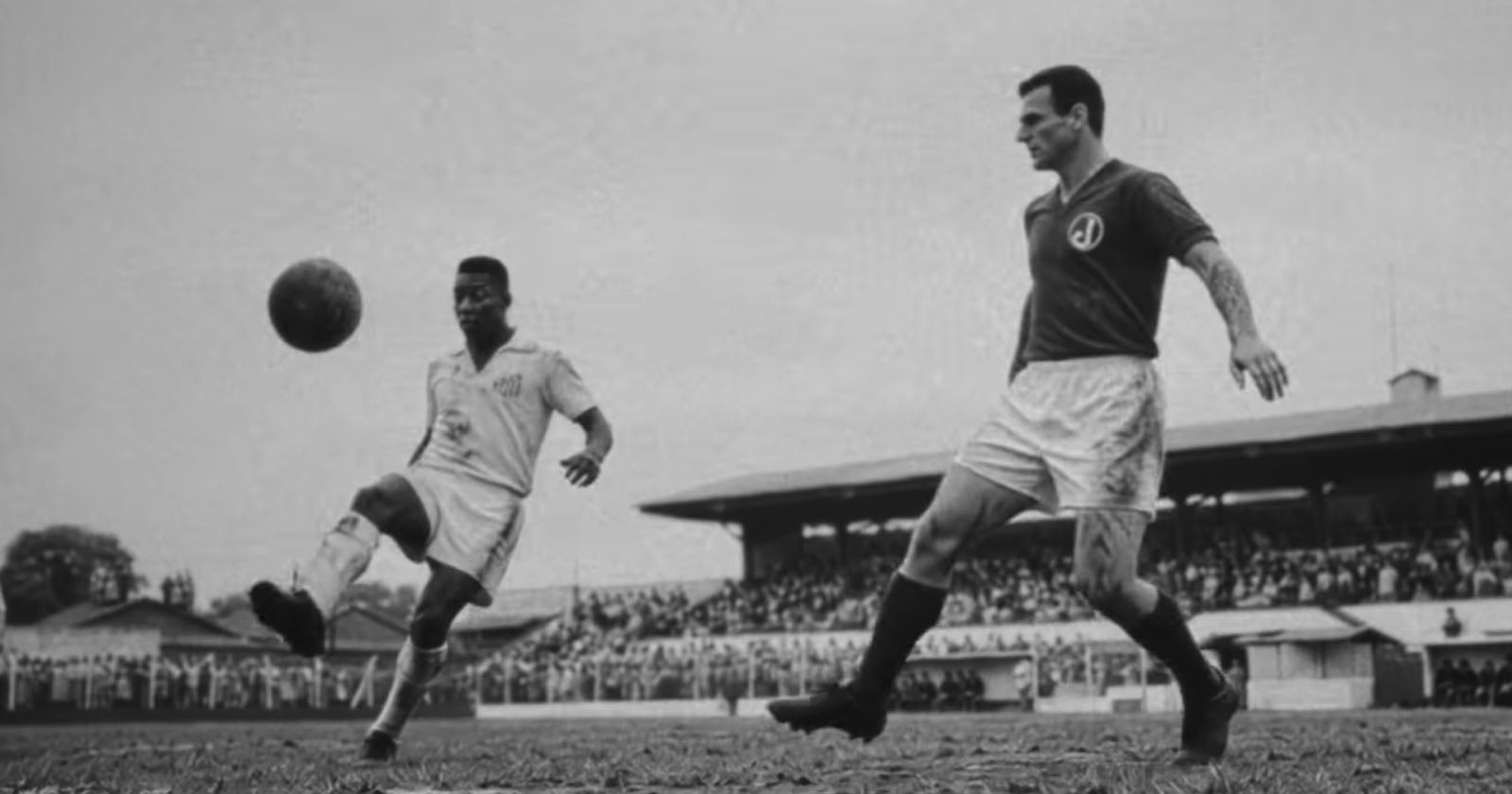
It involved three sombrero flicks.
AI analysis
Questions asked and answered
- What did Google DeepMind and its partners create? They created an AI video recreation of a goal Pelé scored in 1959 that was never filmed. The article says Pelé later called it his best-ever goal.
- How was the recreation made? The team used a photograph by Raphael Herrera as one of many prompts for a set of AI models. Gemini Omni was used to create images of 1959 São Paulo. A film crew shot local actors in 1950s-style jerseys at Javari Stadium, and a model called Performance Control transferred their movements onto the AI video.
- How did the team try to make the recreation historically accurate? According to the article, the team spoke with people who had witnessed the goal and sourced a leather ball of the heavier type used in the mid-20th century.
- Where is the recreation shown, and what is it meant to demonstrate? The footage is on display at the Pelé Museum in Santos. The article presents it as an example of AI being used to recreate events that were never recorded.
Things the article might get wrong
The central claim that the goal was Pelé's best ever rests on a statement the article does not source. It says he "called this one his best-ever goal" and that he "reportedly" scored thousands of goals, but it does not say when, where, or in what context he said either thing. The description of the match itself, including the sequence of three sombrero flicks, a knee flick, and a header, also comes without a named source or match record. These details cannot be verified from the article alone.
The article's account of accuracy comes mostly from the people who made the project. The team says it sought historical accuracy by speaking to witnesses, but the article names none of them, does not describe what they said, and does not explain how their accounts shaped the footage. Calling the result the "best depiction" of the goal, apart from the photograph, is a judgment with no stated method behind it. Most quotes come from Google or a Google DeepMind engineer, and no outside experts are cited on how reliable such recreations are or how viewers might be misled by them. The piece reads in large part as a showcase for Google's tools.
The project also rests on a single photograph and on the memories of unnamed witnesses, so the recreation is an interpretation rather than a record. The article does not discuss how much of the final video comes from evidence and how much from the models' own choices. Readers may want to ask how the team decided which details to trust and which to invent.
This article concludes by saying, "Recreating events that were never recorded is an intriguing use case for AI." And I have to admit, the recreation of an unrecorded Pelé goal is certainly compelling, but it all just feels like a slippery slope. When we can twist "recorded" history to our whim, we are begging for trouble.