
AI Is 70 Years Old Today
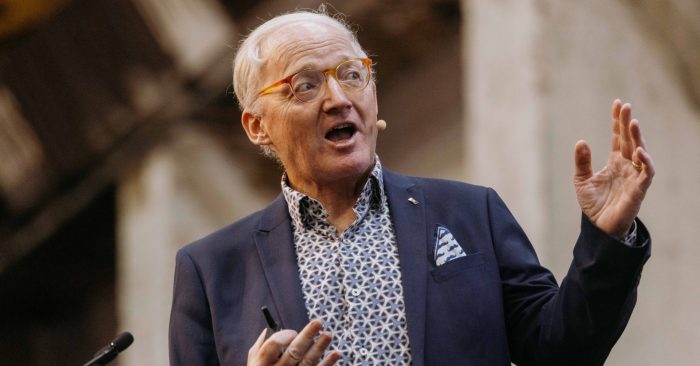
As AI celebrates its 70th birthday, Scientia Professor Toby Walsh surveys its longer-than-expected history and a few key points about its future.
AI analysis
Questions asked and answered
- When and why did artificial intelligence begin as a field? The article states that AI began on 18 June 1956, the first day of an eight-week workshop at Dartmouth College. John McCarthy organised it to start the science of artificial intelligence, and he coined the term.
- Did the 1956 workshop achieve its goals? According to the article, no. McCarthy had promised the agency funding the workshop that the group would make significant progress over the summer, and the article says they failed.
- How close is current AI to human intelligence? The article says current AI models are very impressive in some tasks, such as mathematics and programming, but still make basic mistakes. It says it is hard to know whether matching human intelligence will take a few years or a few decades.
- Will the current AI investment boom end in a bust, and what would follow? The author fears the current boom will end in a bust that mainly transfers wealth from investors to the few AI companies that survive. The article argues that past technology cycles, such as railways, electricity, and the internet, show that the pain of a bust does not last and the promised gains eventually arrive.
- Will one company or country dominate the AI market? The article predicts that AI will not be a winner-take-all market. It says no general-purpose technology has so far been winner-take-all, and it expects many AI systems to run on personal devices, which it describes as more democratic and affordable.
Things the article might get wrong
Several claims are presented without sources. The article says billions of dollars are invested in AI every day, says that "many people" are wondering about returns, and says the author's scientific colleagues do not expect human-level AI to take centuries. None of these claims is supported by data or named sources in the text. The claim that past general-purpose technologies all followed a boom-and-bust cycle is also a simplified historical analogy, and the article does not discuss cases where that pattern did not hold. The prediction that the pain of a bust "won't last" rests on that same analogy.
The article draws broad conclusions from limited examples. A single failed response from Google's AI Overview is used to illustrate AI's weaknesses, and the article does not say how often such errors occur or how they compare across systems. The prediction that there will be "eight billion artificial intelligences" and that the market will not be won by one player is presented as a forecast without supporting evidence or any counterview.
The article also presents the 1956 workshop as the start of AI without discussing earlier work on machine intelligence. The author has an interest in the subject as a professor, chief scientist of UNSW.ai, and author of a book on AI, and the article contains no opposing views from economists, industry analysts, or researchers who expect different outcomes.
Yup. AI is officially 70 years old today and feels like it's just getting started. And Toby Walsh, a professor at UNSW Sydney has a few predictions. And offers a glimmer of hope.
"I fear that the current AI boom will end in an AI bust. This will, at best, transfer vast amounts of wealth from the investors into artificial intelligence to the small number of AI companies that survive the bust.
The good news is that, when that bubble bursts, history suggests the pain won’t last. We will get to an AI future with the gains being promised today. Just as we eventually got to the internet economy promised before the dot com bust."