$55K A Year And No Teachers
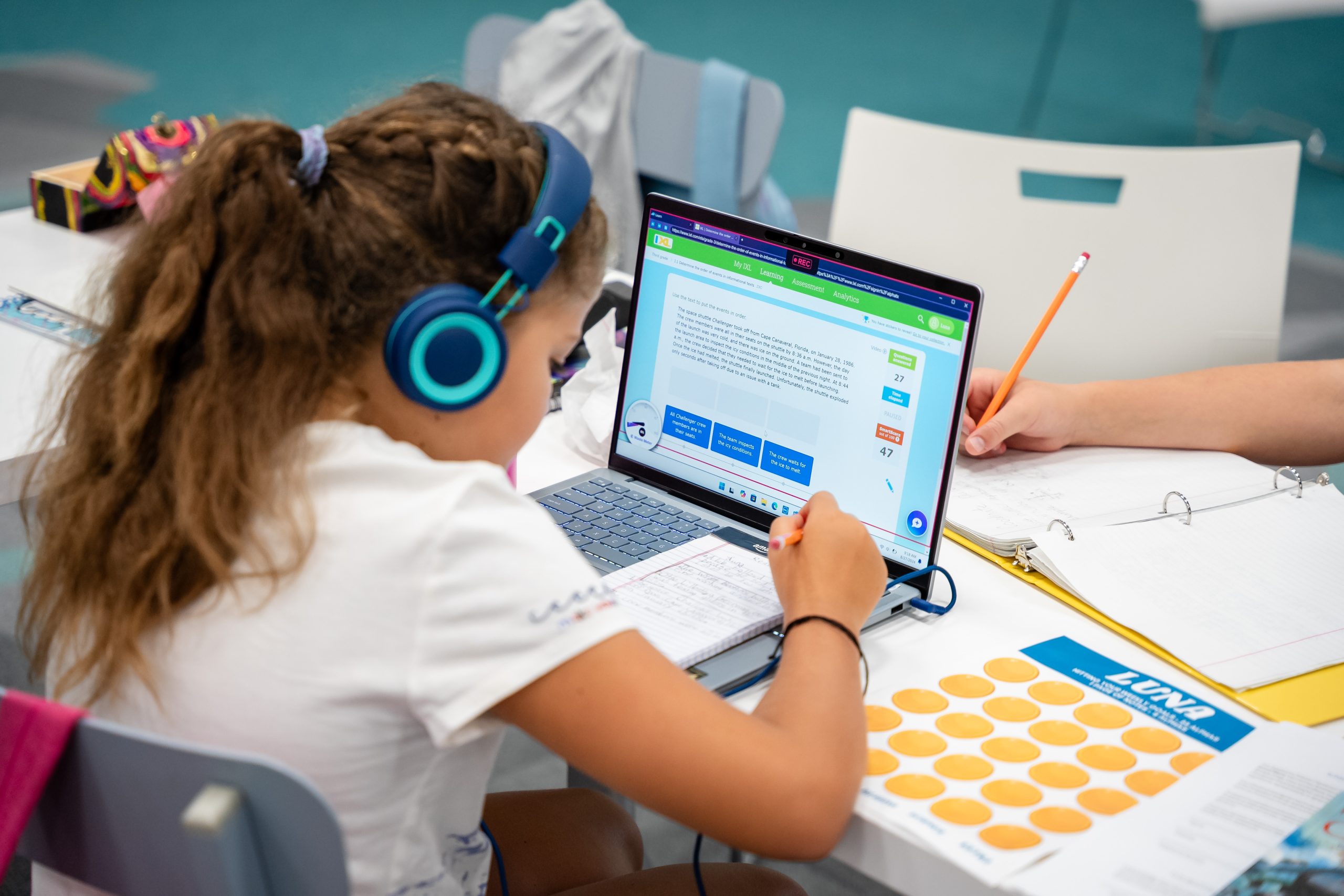
Alpha School, a pricey private school with campuses nationwide, uses artificial intelligence to instruct students. AI schools have been praised by the Trump administration, but researchers say there's limited evidence the model works.
AI analysis
Questions asked and answered
- What is the Alpha Schools model? Alpha uses AI software to teach core academic subjects in about two hours each morning. Adults called "guides" support motivation, emotional needs, and life skills instead of teaching. Afternoons are spent on workshops and projects.
- Is there evidence that AI can work as the main method of teaching? The article says there is little research on AI as the primary teaching method. It cites a January study in the Proceedings of the National Academy of Sciences that linked Khan Academy to modest math gains, but that study examined the site as a support tool, not the main mode of instruction. A 2026 Stanford review found AI can improve performance, but the benefits are less clear when students later work without AI.
- Do Alpha's students outperform other students? Alpha says its students scored in the top 1 to 2 percent on the 2024-2025 Measures of Academic Progress exam, and that the test included all students enrolled for at least a year. Northwestern researcher Charles Logan and MIT researcher Justin Reich said the comparison is not fair, because Alpha's students come from families who can afford tuition of $55,000 a year, while the comparison group is the general public school population.
- How does Alpha handle student data? Founder Mackenzie Price said student data is used only for education, is not sold, shared, or monetized, and is accessible only to staff supporting the student's learning plan. Families can turn off tracking outside school hours. Logan raised concerns about tracking of eye movements, keyboard use, and response times.
Things the article might get wrong
Many of the article's strongest claims come from Alpha itself. These include the statement that students learn twice as fast as traditional students, the 94 percent "love school" figure from a survey of 1,000 students, and the claim that Alpha's AI operates as a closed system with no internet access. The article does not describe how the survey was run, what questions were asked, or how the speed comparison was measured. The comparison that students spend about an hour per subject in traditional schools is also presented without a source. These claims deserve independent checking before they are relied on.
The test score claim also has a selection problem that the article only partly addresses. Alpha's response that the test includes all students enrolled for at least a year does not answer the concern that families who pay high tuition may differ in ways that affect scores. The article presents the political context in detail, including donations and federal attention, but it does not say how much these factors bear on the educational claims. Details such as the Stanford review, the PNAS study, the Pennsylvania rejection quote, and the claim that Price is politically agnostic cannot be verified from the article alone.
Parents appear to be lining up to hand over $55K a year to a school that has no teachers. Austin's Alpha school, which has a curriculum 100% driven by AI, is expanding to Chicago. At that price, this AI experiment had better work to improve education. And if this is the future of education, this is just further proof that the future is already here, it's just unequally distributed.